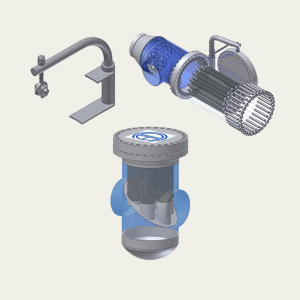
In industrial processes, ensuring that equipment is protected from debris and contaminants is crucial for maintaining efficiency and longevity. Strainers play a vital role in this protection, often coming in various designs to suit specific applications. Two popular types of strainers are the inline strainer and the conical strainer. Each serves its purpose within different operational settings, but understanding their differences and applications can help in selecting the right one for specific needs.
Understanding Inline Strainers
Inline strainers are commonly used in pipeline systems where the flow of liquid needs to be filtered without interrupting the process. They are installed directly into the pipeline and are designed to capture debris as the liquid flows through.
- Inline strainers are ideal for continuous processes, minimizing downtime and maintenance.
- They are versatile, available in various sizes and materials to accommodate different liquids and pressures.
- These strainers are often easy to clean and maintain, making them a practical choice for long-term use.
For those seeking detailed guidance on selecting inline strainers, explore advanced guides and tips to ensure optimal performance and fit for specific applications.
Exploring Conical Strainers
Conical strainers, also known as temporary strainers, are typically used for short-term applications. They are placed inside the pipe and can easily be removed once the initial filtering job is completed.
- Conical strainers are cost-effective for short-term or trial processes.
- They can be customized to fit unique pipe dimensions and configurations.
- Their design allows for quick installation and removal, making them ideal for temporary setups.
To learn about how conical strainers can be tailored to specific projects, discover expert strategies here.
Comparative Analysis: Inline vs. Conical Strainers
Application and Use
The choice between inline and conical strainers largely depends on the application:
- Inline strainers are better suited for permanent installations where continuous filtration is required.
- Conical strainers excel in temporary or one-time filtration needs, often used during startup processes to protect downstream equipment.
For more insights into choosing the right strainer for different applications, find out more about this approach.
Maintenance and Operational Efficiency
Maintenance is another critical factor in this comparison:
- Inline strainers typically require regular cleaning to maintain efficiency but are designed for easy access and service.
- Conical strainers, being temporary, usually do not require extensive maintenance. However, they must be replaced or cleaned after each use to ensure effectiveness.
To understand how maintenance impacts operational efficiency, learn about our tailored solutions for various operational needs.
Conclusion
Selecting the right strainer can significantly impact the efficiency and longevity of industrial systems. While inline strainers provide a continuous, low-maintenance solution for permanent setups, conical strainers offer a flexible, cost-effective option for temporary needs. By understanding the specific requirements of each application, informed decisions can be made to enhance system performance and reliability. For more comprehensive information on strainers and filtration solutions, explore advanced guides and tips available through expert resources.